

In the world of digital marketing, you might have heard the term landing page quite often. But many businesses still confuse it with a normal website page or homepage. The reality is — a landing page is one of the most powerful tools for driving conversions and generating leads.
Whether you are running ads, promoting a service, or launching a product, a landing page is where your audience “lands” after clicking on your offer. And what happens on that page often decides whether you gain a customer or lose one.
Understanding how landing pages work can help you turn your traffic into actual results instead of just clicks.
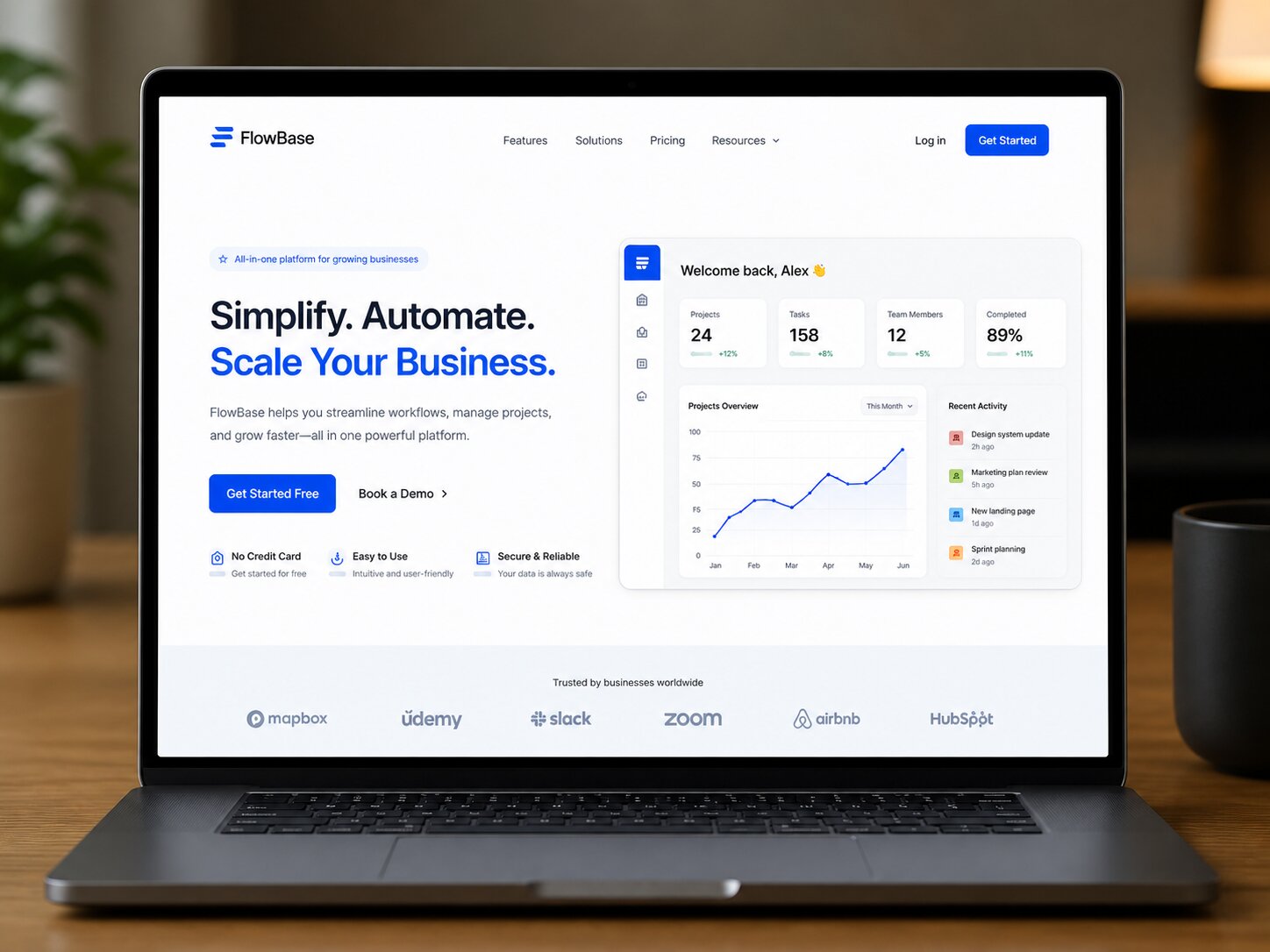
A landing page is a standalone web page created specifically for a marketing or advertising campaign. Unlike a homepage, which contains multiple links and information, a landing page is focused on a single goal or action.
This goal could be anything — signing up for a newsletter, downloading an ebook, booking a consultation, or making a purchase. The entire page is designed in a way that guides the visitor towards completing that one action.
In Simple Words :
A landing page is where visitors land → take action → and convert.
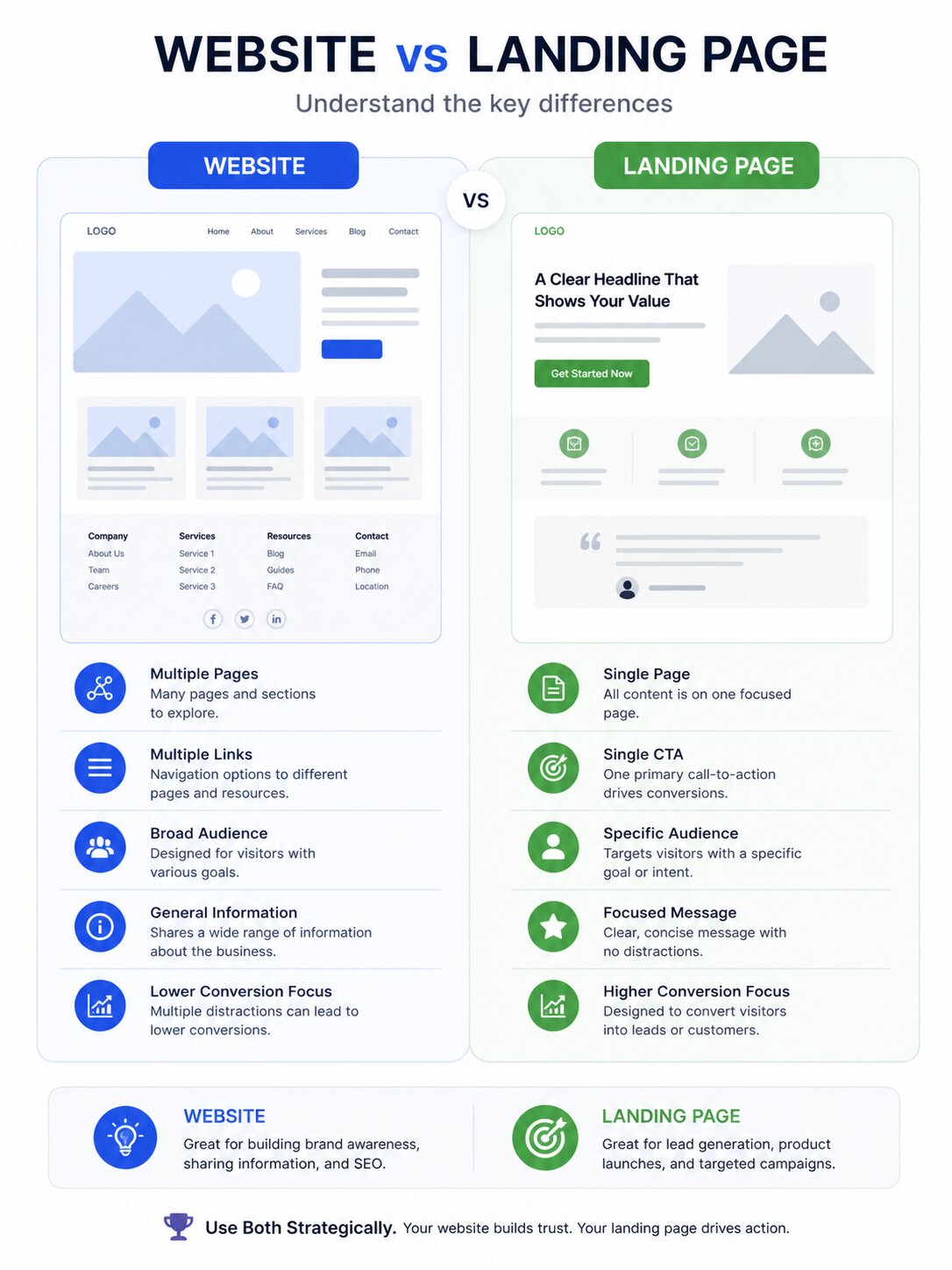
One of the biggest misconceptions is that a landing page is just another page on your website. While it can be part of your website, its purpose is completely different.
A website is designed to provide information and allow users to explore. A landing page, on the other hand, is designed to convert visitors into leads or customers.
Key Differences :
Purpose :
Website → Information and exploration
Landing Page → Conversion and action
Navigation :
Website → Multiple pages and links
Landing Page → Limited or no navigation
Focus :
Website → Broad content
Landing Page → Single objective
User Journey :
Website → Long and exploratory
Landing Page → Short and direct
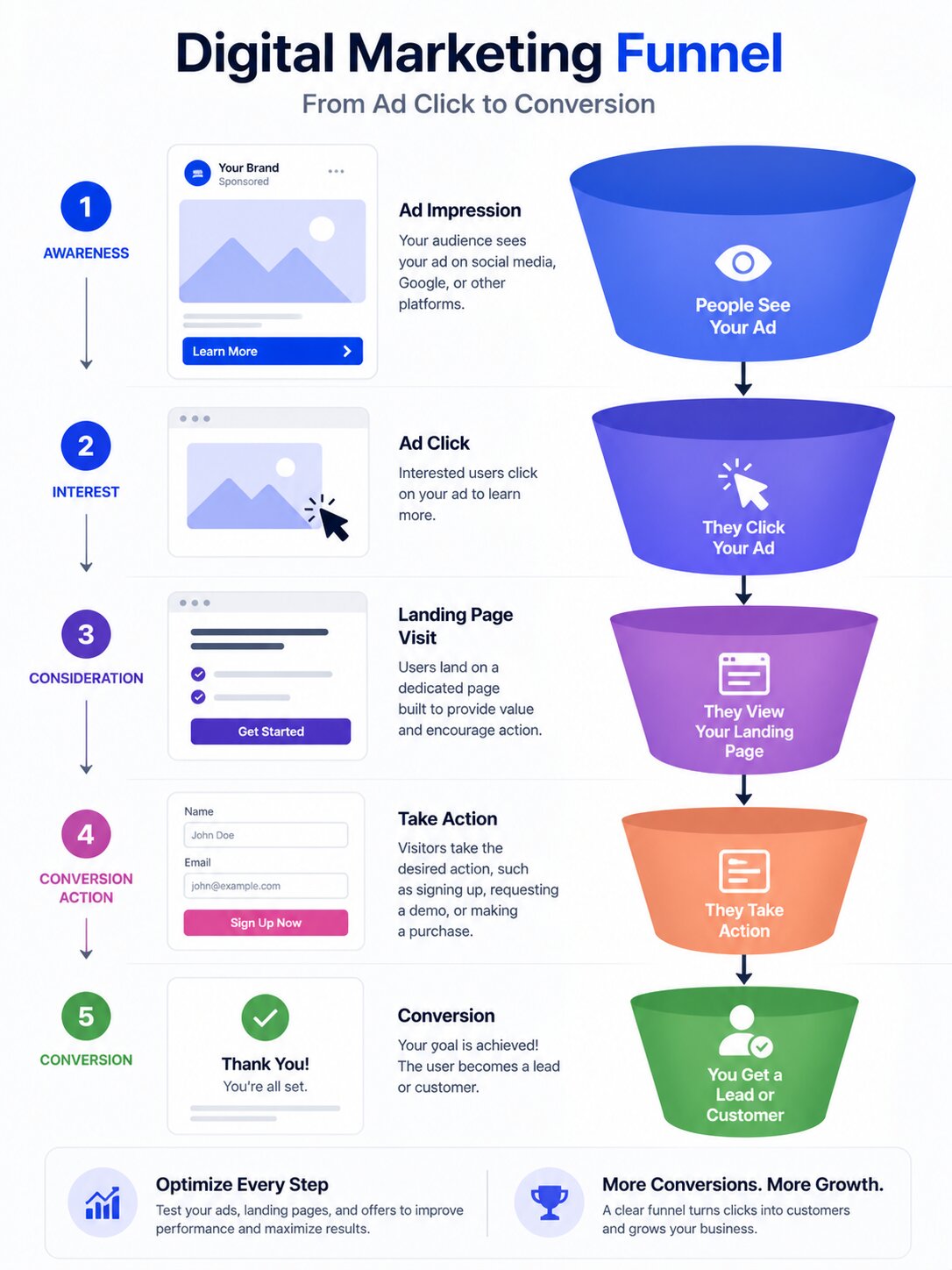
Many businesses spend money on ads but fail to get results because they send traffic to their homepage instead of a landing page. This is where they lose potential conversions.
A well-designed landing page ensures that your visitors are not distracted and are guided clearly towards taking action.
Landing pages remove confusion. When a visitor clicks on an ad expecting a specific offer, they should land on a page that directly delivers that promise. This consistency increases trust and improves the chances of conversion.
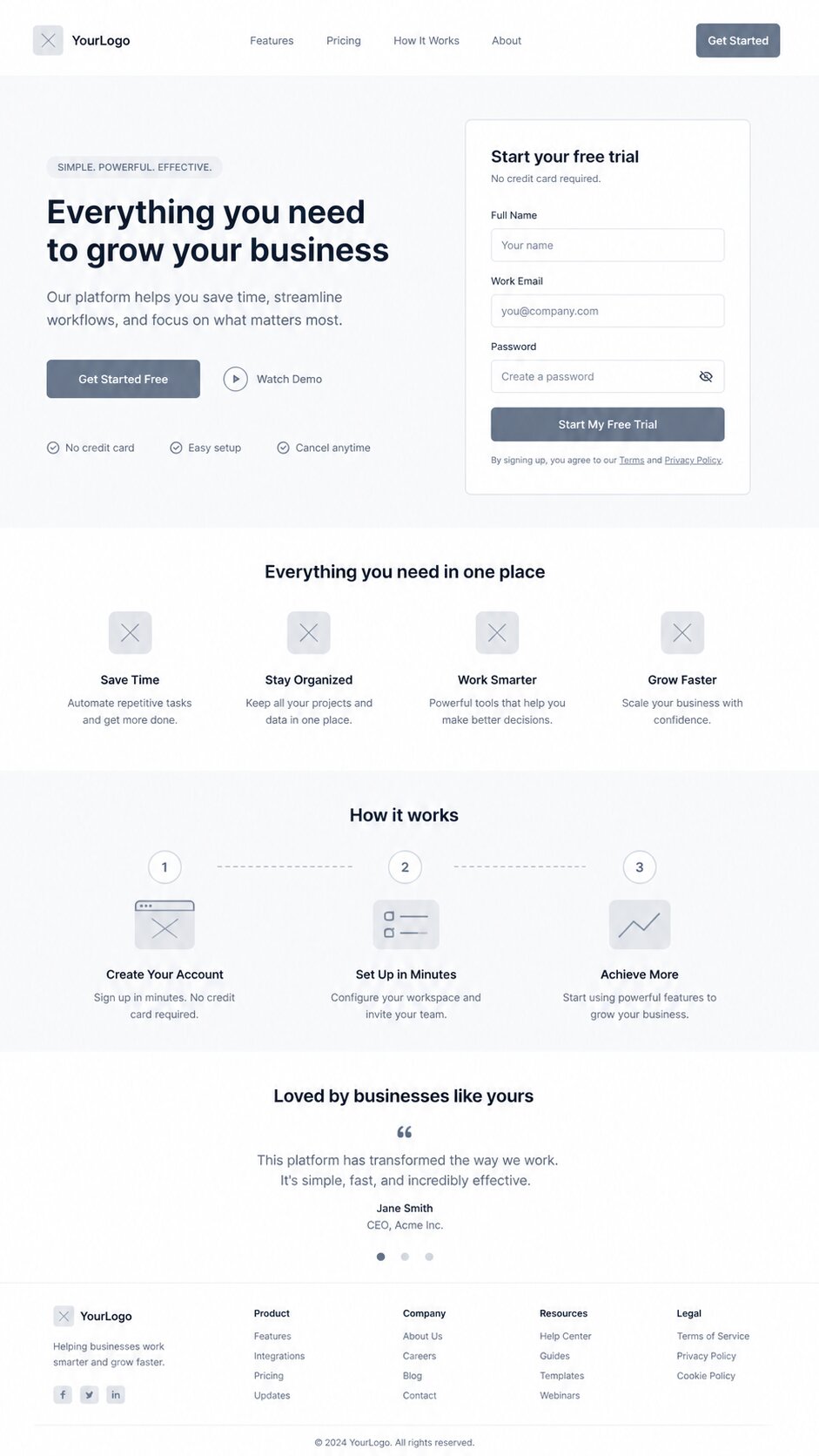
Not all landing pages perform well. The difference between an average and a high-converting landing page lies in its structure and elements.
Essential Components :
Compelling Headline :
Grabs attention and clearly communicates the value
Subheadline :
Supports the main headline with more clarity
Call-to-Action (CTA) :
A clear button like “Sign Up,” “Get Started,” or “Book Now”
Visuals :
Images or videos that support the message
Social Proof :
Testimonials, reviews, or trust badges
Lead Form :
Simple and easy-to-fill form for user information
A good landing page is not just about design — it’s about clarity, trust, and simplicity.
Different goals require different types of landing pages. Understanding this helps you create the right page for the right purpose.
Common Types :
Lead Generation Landing Page :
Collects user information through forms
Click-Through Landing Page :
Guides users to another page like a checkout
Sales Landing Page :
Focuses on selling a product or service
Squeeze Page :
Captures emails with minimal content
Each type is designed to serve a specific purpose, but all of them share one common goal — conversion.
Creating a landing page is not just about putting content together — it requires strategy and understanding of user behavior.
Simple Steps to Follow :
Consistency between your ad and landing page is crucial. If your ad promises something, your landing page must deliver it instantly.

A landing page is not just another web page — it is your conversion engine. It bridges the gap between attracting visitors and turning them into customers.
Without a proper landing page, even the best marketing campaigns can fail. But with a well-optimized landing page, you can significantly improve your results without increasing your budget.