
Marketing today is no longer just about reaching people — it’s about reaching the right people and getting measurable results from every rupee you spend. Businesses, especially in competitive markets, often struggle with one major decision: should they invest in traditional marketing methods or shift towards performance marketing?
The answer isn’t as simple as choosing one over the other. Both approaches serve different purposes, and understanding how they impact your business growth is the key to making a smart investment decision. While traditional marketing focuses on visibility and brand recall, performance marketing is designed for data-driven growth and ROI.
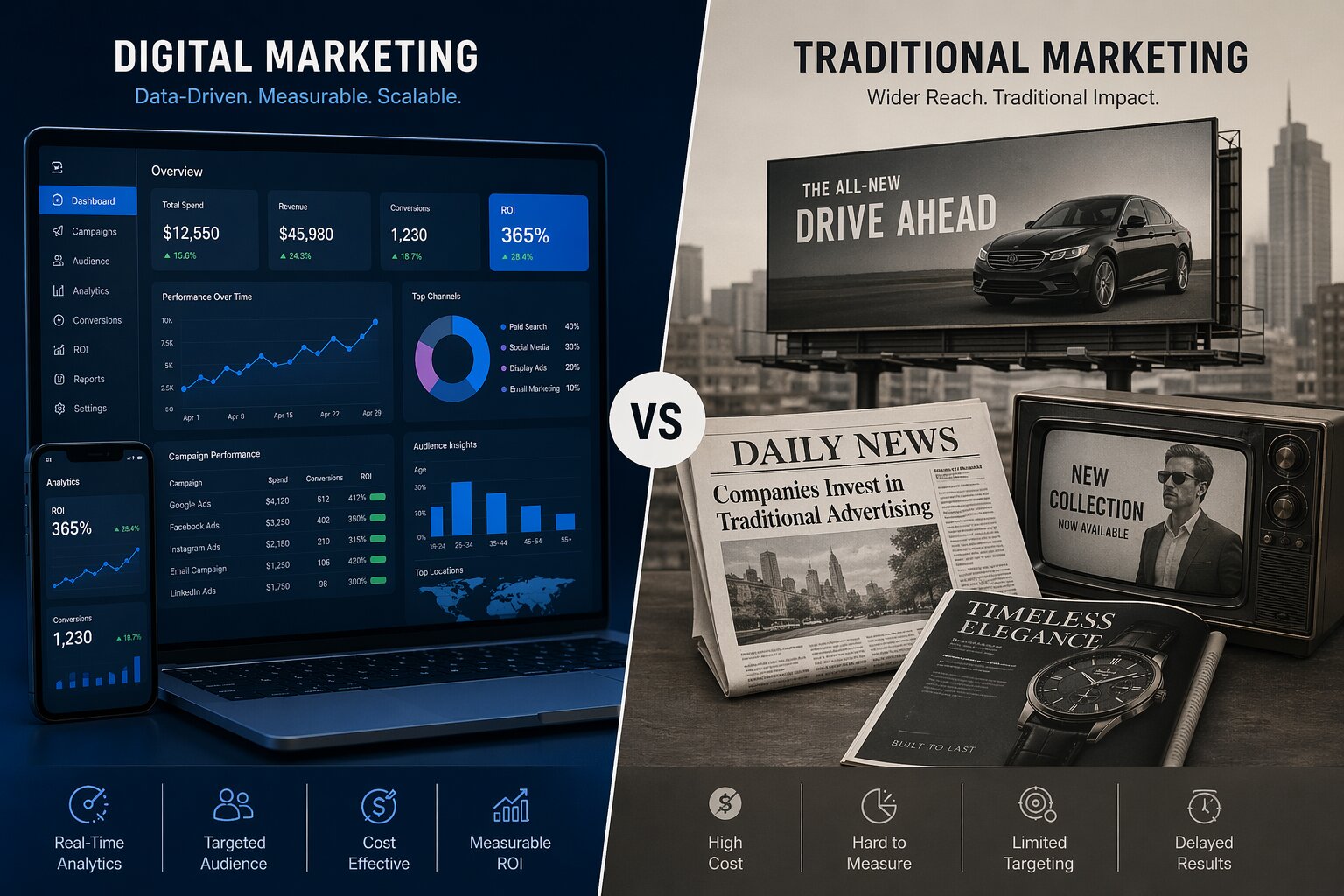
Traditional marketing refers to the conventional methods of advertising that do not rely on digital platforms. These methods have been used for decades and are still effective when the goal is to build mass awareness and brand presence.
Even in today’s digital age, traditional marketing plays a significant role in shaping consumer perception. Seeing a brand on a billboard or television repeatedly creates familiarity, and that familiarity often leads to trust over time.



Difficult to measure exact ROI
Requires high upfront investment
Limited audience targeting capabilities
Slow feedback and optimization process
Traditional marketing is ideal when your focus is on visibility and long-term branding, but it lacks the precision required for performance-driven growth.
Performance marketing is a results-oriented digital strategy where businesses pay only when a specific action is completed, such as a click, lead, or sale. It is built for brands that want full control over their marketing performance and spending.
What makes performance marketing powerful is its ability to provide real-time insights and continuous optimization. Instead of guessing what works, you rely on actual data to make informed decisions.
Google Ads (search and display)
Social media ads (Instagram, Facebook)
Affiliate marketing
Influencer collaborations
Native and programmatic advertising
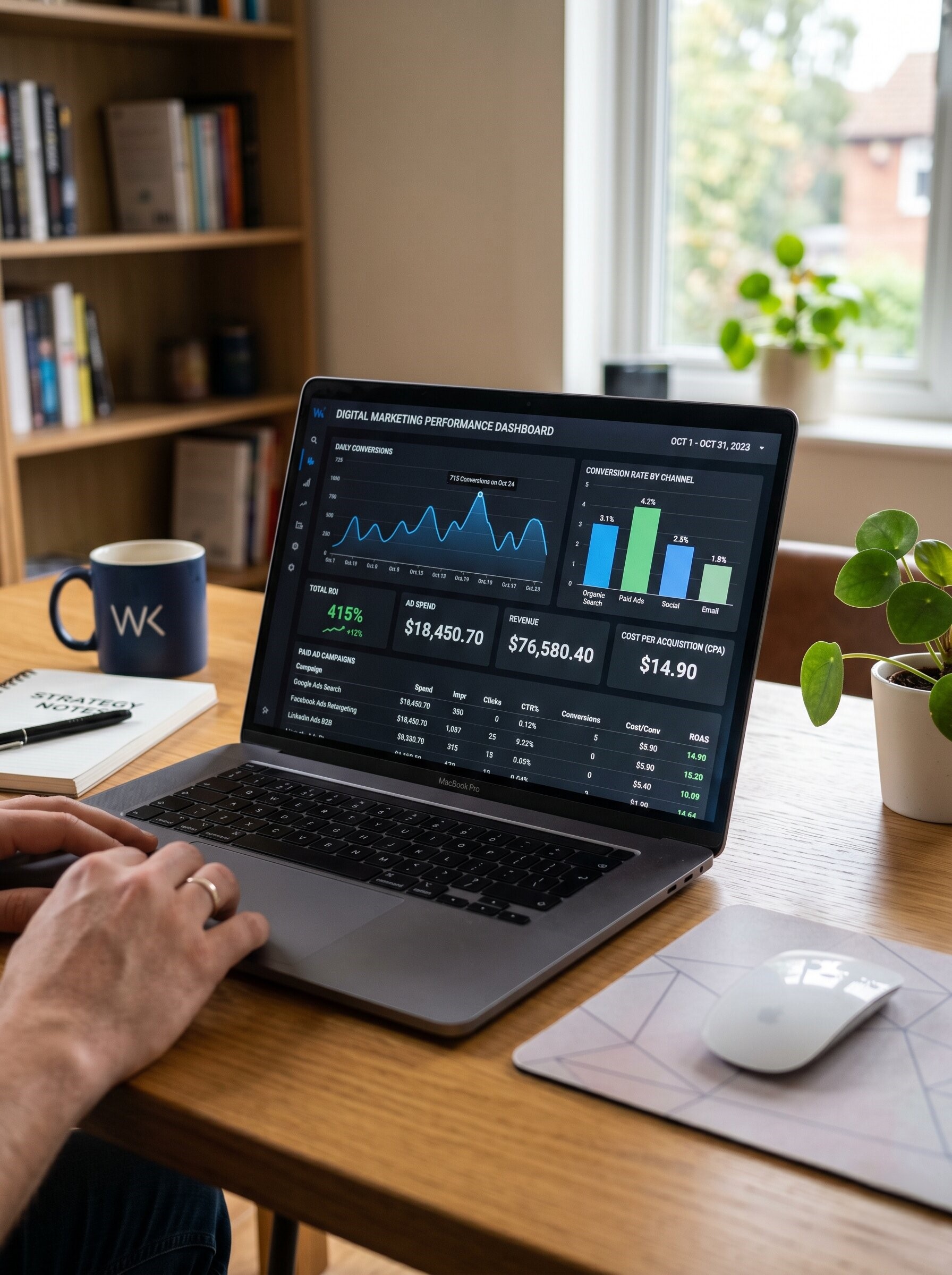
Highly targeted audience reach 
Real-time tracking and measurable results
Flexible budget control and optimization
Scalable campaigns with better ROI
Requires continuous monitoring
Requires continuous optimization
Increasing competition can raise ad costs
Needs proper strategy and expertise
Performance marketing is best suited for businesses that want growth, leads, and measurable outcomes, rather than just exposure.
To make a smart decision, it’s important to understand how these two approaches differ in real-world scenarios, not just in theory.
Core Differences That Matter :
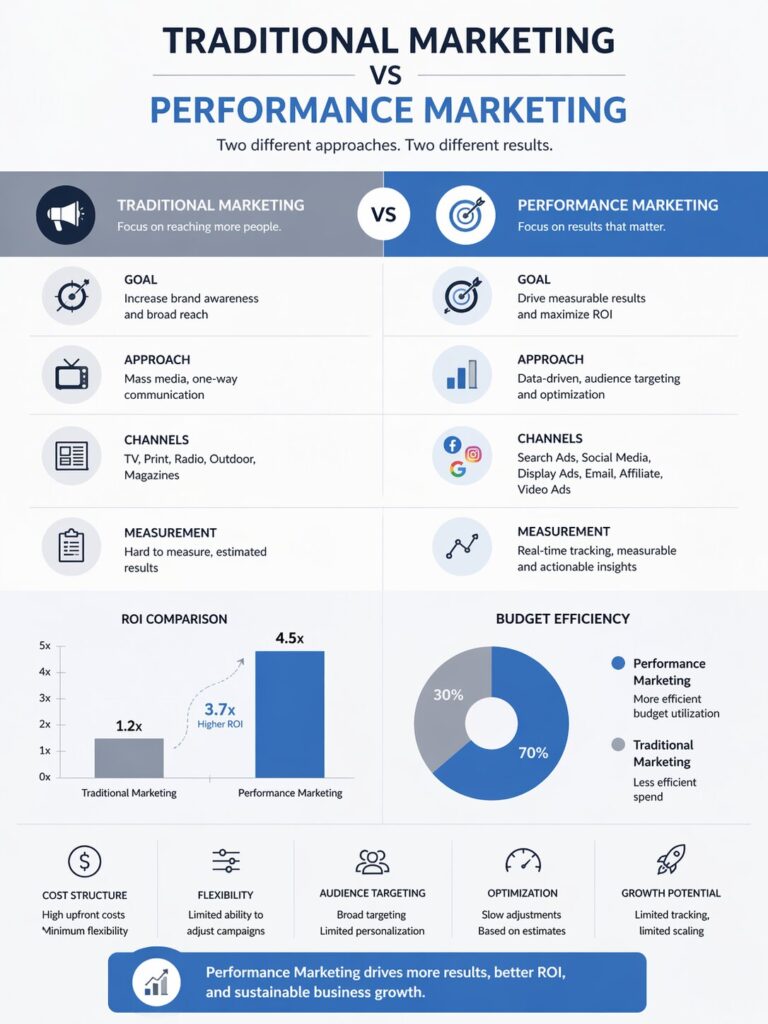
The right investment decision depends largely on your business goals and stage of growth. If your primary objective is to create awareness and establish a brand presence, traditional marketing can still play a role. However, if your focus is on generating leads, driving sales, and scaling your business, performance marketing becomes the more practical choice.
For startups and growing businesses, budget efficiency is crucial. Spending large amounts on channels that cannot be measured accurately can slow down growth. Performance marketing, on the other hand, allows you to test campaigns, analyze results, and improve continuously.
Recommended Budget Allocation Strategy:
70% Performance Marketing → Focus on conversions and growth
20% Branding & Content → Build trust and authority
10% Experimental Channels → Test traditional or new strategies
This approach ensures that your marketing efforts are not just cost-effective, but also aligned with long-term business goals.
Instead of choosing one over the other, many successful brands combine both strategies to maximize their impact. Traditional marketing helps in building awareness, while performance marketing ensures that this awareness is converted into actual results.
For example, a brand might use billboards or print ads to create visibility and then run digital campaigns to retarget interested users. This creates a seamless customer journey from awareness to conversion.
How a Hybrid Strategy Works :
Awareness → Traditional marketing
Engagement → Content and social media
Conversion → Performance marketing
This balanced approach allows businesses to leverage both reach and efficiency without compromising on ROI.
Marketing today is about making smarter decisions, not just bigger investments. While traditional marketing still holds value in building brand perception, it is no longer enough on its own in a digital-first world.
Performance marketing gives you the ability to track, optimize, and scale, making it the preferred choice for businesses aiming for consistent and measurable growth.